Monday, 5 September 2011

WEEKEND 3/4/SEPT/2011


!!!!!!!!!!!!!!!!!!!!!!!!!!!!!!!!!!!!!!!!!!!!!!!!!!!!!!!!!!!!!!!!!!!!!!!!!!!!!!!!!!!!!!!!!!!!


Just a few from a visit to Stithians Res on Saturday and Nanquidno valley near St Just on Sunday. Birding Highlight was a Wryneck at Nanquidno, but no chance of photo's.


CHIFFCHAFF. (Stithians)


CHIFFCHAFF. (Stithians)


SPECKLED WOOD. (Nanquidno)


SWALLOW. (Nanquidno)


SWALLOW. (Nanquidno)

No I'm not flying all the way to Africa !


!!!!!!!!!!!!!!!!!!!!!!!!!!!!!!!!!!!!!!!!!!!!!!!!!!!!!!!!!!!!!!!!!!!!!!!!!!!!!!!!!!!!!!!!!!!


Thursday, 1 September 2011

WADER FEST ON HAYLE ESTUARY.


^^^^^^^^^^^^^^^^^^^^^^^^^^^^^^^^^^^^^^^^^^^^^^


Well here we are again, and firstly apologies to everyone for the lack of posts and comments but I just felt I needed a blogging break and very few photo opportunities have occurred.
So what better to get the juices running again when a nice American visitor namely a Baird's Sandpiper was reported on the Hayle Estuary, along with Curlew Sandpiper and Little Stint So yesterday morning met up with Ashley and set off to locate the bird. Already a couple of local birders said they had seen it on the Estuary at the back of Carnsew Basin, arriving at the spot it was not to be seen but then managed to scope it further along the shore with a group of Sanderling.We went over and got set up for some pics and off they went towards the mouth of the Hayle River, we then spent around half an hour searching for it with no sign , so decided to walk back to the car.
After about ten minutes walking a wader dropped onto the shoreline and looking through the bins we saw it was the Baird's, so we spent the next fifteen minutes taking photo's down to about 20ft until it flew off down the Estuary.
When we got back onto the road and just past the Tempest Factory we looked over the causeway wall and a whole group of waders including Little Stint and Curlew Sandpiper were feeding down to distances of 10ft.
So we spent quite a long time taking loads of images of this bonus, and it made a great end to a superb morning.


BAIRD'S SANDPIPER.


BAIRD'S SANDPIPER.


DUNLIN.


CURLEW SANDPIPER.


RINGED PLOVER.


SANDERLING.


LITTLE STINT.


LITTLE STINT.


TURNSTONE.

WHEATEAR.

You certainly know Autunm has arrived when you start seeing the iconic Wheatear


^^^^^^^^^^^^^^^^^^^^^^^^^^^^^^^^^^^^^^^^^^^^^^^^^^^^


Friday, 19 August 2011

ST MICHEAL MOUNT ( MONOCHROME )


>>>>>>>>>>>>>>>>>>>>>>>>>>>>>>>>>>>>>>>>>>>>>>>>>>>>>>>>>>>>>>>>>>>


Just thought I would throw a Monochrome image into the mix tonight, just to ring the changes. Its of St Micheals Mount at Marazion, and I've pulled it from the Archive.


ST MICHEALS MOUNT


>>>>>>>>>>>>>>>>>>>>>>>>>>>>>>>>>>>>>>>>>>>>>>>>>>>>>>>>>


Saturday, 13 August 2011

TURTLE DOVE


>>>>>>>>>>>>>>>>>>>>>>>>>>>>>>>>>>>>>>>>>>>>>>>>>


The morning started dull and wet when I first looked out this morning,but decided to take a drive down to Drift Res which is the on the West side of Penzance.
The reason was there has been a Turtle Dove staying around for the past three or four days,though this is not a new bird for me I do not have any decent images of one, so was hoping I could put this right.
Upon arrival there were a couple of other birders there, but the bird had not shown, I then spoke to the chap who lives in the house and he told me it had been there earlier.
After a wait of about 30mins it flew onto the telegraph pole and wires where it would stay for a few minutes and then disappear back into the garden.
I spent the next 11/2 hours with it coming up and then flying down again for about 20 minutes, still I did manage to get a good few shots of it.
So another year tick in the bag and a few good images to boot, it don't get much better than this.


TURTLE DOVE.


TURTLE DOVE.


TURTLE DOVE.


>>>>>>>>>>>>>>>>>>>>>>>>>>>>>>>>>>>>>>>>>>>>>>>>>>>>>


Thursday, 11 August 2011

CANADA GOOSE, HERRING & BLACK HEADED GULL.


^^^^^^^^^^^^^^^^^^^^^^^^^^^^^^^^^^^^^^^^^^


Not had the chance to get out much this week, just a quick visit to Stithians Res on Wednesday Morning when I managed to see a Wood Sandpiper from the main hide.
The rest of the week has been looking after the two eldest Grandchildren and we have not had the best of weather just the odd couple of bright spells here and there.
So for tonight's pics I have dug into last Sundays outing to Drift Res, Marazion and Ryans Field at Hayle, and came up with three  common species namely Canada Goose a Herring Gull and a Black Headed Gull.
So hopefully next week will get back to normal and if the weather improves would like to get out and do some birding.


Black-Headed Gull.


Canada Goose.


Herring Gull.


^^^^^^^^^^^^^^^^^^^^^^^^^^^^^^^^^^^^^^^^^^


Tuesday, 9 August 2011

THE FRUITS OF SUMMER.


$$$$$$$$$$$$$$$$$$$$$$$$$$$$$$$$$$$$$$$$$$$$$$$$$


 These images have been taken at various places over the last few weeks.


Common Toadflax.


Opposite-Leaved Golden Saxifrage.


Sheeps Bit.


Sloe Berries
With these you can make tasty Sloe Gin.


Spear Thistle.


Wild Honeysuckle.


Wild Teasel.


$$$$$$$$$$$$$$$$$$$$$$$$$$$$$$$$$$$$$$$$$$$$$$$$$$$$$$


Sunday, 7 August 2011

DRIFT BLACK KITE


^^^^^^^^^^^^^^^^^^^^^^^^^^^^^^^^^^^^^^^^^^^^


Well it turned out to be a good Sunday Morning, after checking the St Just area near Lands End for the Black Kite that has been hanging around for nearly two weeks. Having seen no sign of it we came back to Drift Res near Penzance, and took a walk out to the hide when we were almost there Paul called out Got it and there it was over the fields at the back of the Res.
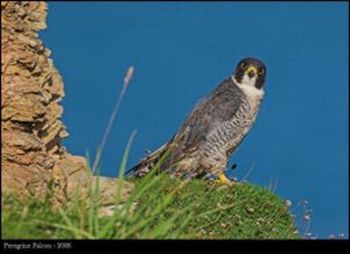
It stayed around for 50 mins though distant and at one point was being mobbed by a Buzzard and a Peregrine Falcon. It was also harried most of the time by Ravens.
Anyway it was really great to stand and watch this Lifer glide beautifully around the sky, it was just a pity I could only manage a few record shots.
So here it is..............................................
THE BLACK KITE


^^^^^^^^^^^^^^^^^^^^^^^^^^^^^^^^^^^^^^^^^^^^^^^


Thursday, 4 August 2011

STITHIANS RES


***************************************************


Decided to make a long overdue visit to Stithians Reservoir yesterday morning, the forecast was good and it certainly was a lovely still Summers morning.
Started at the Golden Lion Cutoff ( for anyone who does not know the Golden Lion is an old country Inn and having just thought I will try to include a Photo at a later date) where it was very quite with only a few Coot, Little Grebes, Herons and Mallards.
So I had a quick look and drove on to the Southern Causeway Hide, water levels at the moment are beginning to get a bit low which is normal for this time of year as it exposes muddy margins.
So having a good scan I only picked up a Green Sandpiper which was to far away for pics,although I had good views in the scope.
I could make out some waders along the distant shoreline, so decided to have a walk along the East side towards the Dam. It was this walk that produced the best birding With the following species sighted.

14 Common Sandpiper.
3 Green Sandpiper.
4 Redshank.
12 Cormorants.
8 Tufted Ducks
17 Little Grebes.
1 Great Crested Grebe.
5 Grey Herons
Plus good numbers of Coot, Herring Gulls and Lesser Black Back Gulls.
Sadly the Green Sands were all to far away for photo's,.
On the walk I also noticed a few butterflies, so for the walk back I put the 100-300mm Lens on the camera to try and get a few shots.
So below is a selection of the mornings images.


Common Sandpiper at the Dam


Common Blue Damselfly.


Hedge Bindweed.


Green-Veined White.


Above and below a Cormorant at the Dam which was a real poser.


Peacock Butterfly.

***********************************************************


Sunday, 31 July 2011

PORTHGWARRA


********************************************************************


Porthgwarra is located on the South Coast of Cornwall, about 2 miles East of Lands End.

Located above the hamlet and small cove is Gwennap Head probably the best seawatching location in Cornwall, it is from here through mid Summer to the end of Autumn the Southwest seawatch group do a census of passing seabirds,and this has turned up a few rarities over the past years. It is also a very good area for Butterflies and insects which can be found over the heathland. Walking and cliff climbing are also very popular pastimes during the Summer months. I hope the few images below which were taken over the last week, convey the feeling of the area which is well worth a visit.


The small cove is used by only a few small local boats, and is not really suitable as a beach area


A safe haven.


In Summer the heathland along the cliffs is a blaze of colour with the heathers, Grasses and other plant life that live here.


The old Coastguard lookout at the top of Gwennap Head, which is now manned by the Southwest Volunteer coastguard group which keeps up a much needed service around our coastline.


The view looking South West below the lookout station and just to the right of the rock on the headland you can see a member of the Seawatch group. This brings the scale of the area into perspective.


Walking back towards the cove this is the view North Eastwards along the coast, and the entrance to Porthgwarra from the sea.


**************************************************


Monday, 25 July 2011

PENDEEN WATCH AND THE LEVANT MINE


^^^^^^^^^^^^^^^^^^^^^^^^^^^^^^^^^^^^^^^^^^^^^^^^^^


North of Lands End on the Atlantic Coast there is situated the village of Pendeen, and west of the village on the headland is Pendeen Watch. This is one of the best places on the North coast for seawatching (The Migration of passing Seabirds).
To the South West of Pendeen is a large coastal mining area encompassing the Levant and Botallack Mines.


PENDEEN WATCH


Pendeen looking North along the coast.


The view from Pendeen to the Levant Mine


 Pendeen Lighthouse is located to the north of Pendeen in west Cornwall United Kingdom. Designed by the Trinity House Engineer Sir Thomas Matthews, the 17 m tower, buildings and surrounding wall was constructed by Arthur Carkeek of Redruth. The five-wick Argand lamp provided by Messers. Chance, of Birmingham, was commissioned on 26 September 1900 and replaced in 1926 by an electric one. The original Argand oil lamp was on display at the Trinity House National Lighthouse Museum Penzance until 2005 when the museum closed. Pendeen Lighthouse was automated in 1995 with the keepers leaving the station on 3 May.


Apart from the tower itself, with its machinery built into the base, there is an 'E' shaped building split into a terrace of four cottages. Three of the cottages were originally used to house the three resident keepers, their wives and families, with the fourth used as an office area and sleeping accommodation for the supernumerary keepers. They are now let as holiday cottages.


Behind the cottages there were three kitchen gardens (which soon fell into disuse as nothing would grow in such an exposed position) and, on the seaward side of the complex, a fog horn and its accompanying machinery. Water was originally collected off the flat roof of the accommodation block and stored in an underground tank. So, apart from food and paraffin, the lighthouse keepers were virtually self-sufficient

Historical Text taken from Wikipedia.

THE LEVANT MINE.


From the Levant Mine to Pendeen Watch.


 LEVANT MINE.


Levant - A Brief History


Levant is one of Cornwall's most famous mines and like many others in the county very little is recorded of its early history. In 1820 Richard Boyns, a local mining man, formed a new company to work the mine. Almost immediately they struck a rich vein of copper ore which eventually led to large dividends being paid to the share holders. This company operated Levant until getting into difficulties in 1871 when a new company was formed to take over the mine, its purser being Richard White, who was to run Levant for the next 30 years or so.


Over the years the mine continued to get deeper and to go further under the Atlantic Ocean, reaching its deepest point the 350 fathom level by 1904. Access to the lower levels was achieved by sinking two shafts out under the sea, Old Submarine shaft connecting the 210 to the 302 fathom level and, New Submarine Shaft connecting the 260 to the 350 fathom level.


To get to and from their place of work the miners had to climb many hundreds of feet on the ladders. In 1857 a Man Engine was installed on the mine, and eventually this saved the men enormous toil by enabling them to descend to and ascend from the 266 fathom level ( approximately 1800 feet from surface) with very little effort. On October 20th 1919 however the main rod of the Man Engine broke killing 31 miners and injuring many more.


In 1920 the old cost book company was dissolved to be replaced by a new limited company 'The Levant Tin Mines Limited' under a new manager Colonel F.F. Oats. Amazingly, only working from surface down to the 210 fathom level the mine survived for ten years on ground supposedly worked out many years before. It did however finally close in October 1930.


The Levant Mine Disaster


On the fateful day of the 20th of October 1919, just about 2.45pm in the afternoon, the Man engine was carrying a full load of miners who were returning to surface at the end of their shift. An iron strap securing the beam to the wooden rod in the shaft broke. The Man engine rod fell down the upper parts of the shaft snapping in several places and carrying its human cargo with it. At a depth of almost 150 feet, just below the 24 fathom balance bob, the engine rod broke in two and crashed down through the shaft. Projections on the side of the engine rod known as catch wings stopped the rod from any further descent at the 70 fathom level (420 feet). There was still a great deal of destruction caused to the upper parts of the shaft and 31 miners were lost. A simple plaque next to the shaft list the names of those miners lost. More can be learned about the human side of the disaster at the excellent Levant Mine Disaster. The disaster caused a body blow to Levant, one from which it was never really to recover.
Historical text taken from Nicholas family history link below.


^^^^^^^^^^^^^^^^^^^^^^^^^^^^^^^^^^^^^^^^^^^^^^^^^^^^^^^